So... Which Hand Gripper Should You Actually Buy?
I’ve got a confession to make. I have a bit of a problem. It started innocently enough: I bought a Captains of Crush gripper because everyone said that’s what serious grip athletes used. Then I wondered what GHP felt like. Then I bought a Baraban. Then another. Then another. Before long I’d convinced myself I needed every hand gripper ever made.

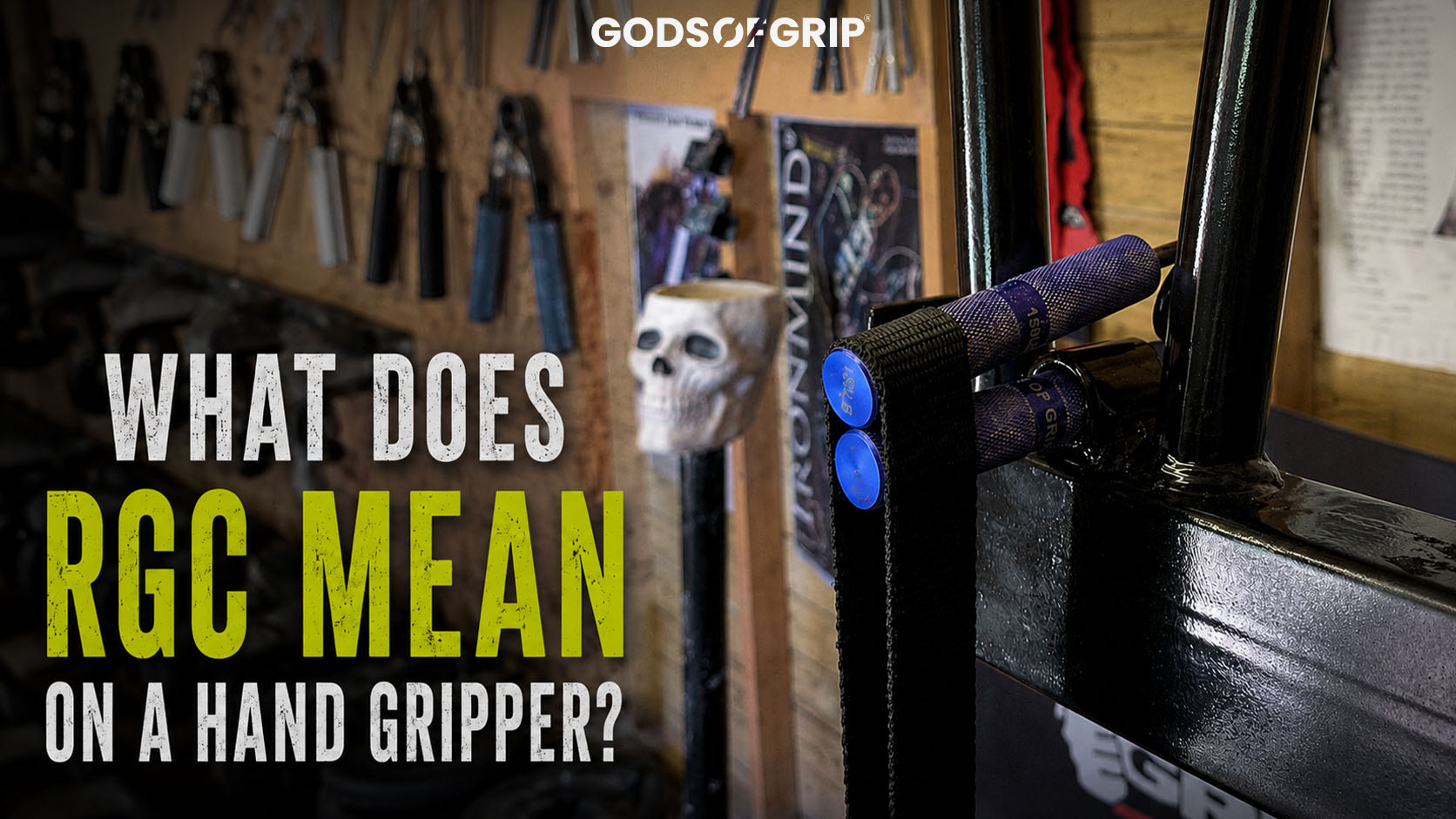
A small part of my hand gripper collection in the Grip Shed. Yes, there are more.
Fast forward a few years and I’ve somehow ended up with a collection of well over 300 hand grippers . Some are legendary, some are incredibly rare, some cost a small fortune and some genuinely feel like they were made in someone’s garage on a Friday afternoon. And yes, I’ve bought some absolute rubbish over the years. The upside is that I’ve squeezed pretty much everything worth squeezing.
This guide is my attempt to answer the question properly: which hand grippers are actually worth buying in 2026? Not ten random Amazon grippers with affiliate links, but the brands people actually talk about when they get serious about grip: Gods Of Grip Elite , IronMind Captains of Crush, Cannon PowerWorks Standard Grippers, Robert Baraban, GHP, Gods Of Grip Essential and the old-school Warren Tetting grippers.
The Quick Answer
If you don’t fancy reading several thousand words written by a man who owns an unreasonable number of hand grippers, here’s the short version.
| Best for | My pick |
|---|---|
| Best overall training range | Gods Of Grip Elite Series |
| Best heritage & certification | IronMind Captains of Crush |
| Best for precise progression | Cannon PowerWorks Standard Grippers |
| Best handmade / most variety | Robert Baraban |
| Best legacy performance range | GHP |
| Best beginner / value range | Gods Of Grip Essential |
| Best collector’s choice | Warren Tetting |
That table is deliberately simple. The interesting bit is why , because the best gripper for a complete beginner is not necessarily the best gripper for someone chasing a Captains of Crush certification or trying to bridge a tiny RGC gap.
- Jump to: Elite Series · Captains of Crush · Standard · Baraban · GHP · Essential · Tetting · Buying Advice · FAQs
Why Should You Listen to Me?
Fair question. Over the last decade I’ve collected more than 300 hand grippers, competed internationally in grip sport, designed and manufactured grippers, rated thousands of closes and spent a frankly stupid amount of time talking about springs, knurling and handle spreads with other grip nerds.
My last real deep dive into grippers was back in 2022 — you can read that older guide here . A lot has changed since then, so this is the 2026 version.
I’m also going to praise competitors where they deserve it. Gods Of Grip makes two of the ranges in this comparison, so pretending this is some mysterious independent laboratory test would be ridiculous. I’d rather tell you where another brand is genuinely better for a particular job than lose credibility trying to make ours win every category.
One Warning Before You Buy a Gripper
Don’t automatically buy the hardest one. It’s probably the most common mistake I see. Someone watches a video of a Captains of Crush No.3 close, orders something miles beyond their current level, squeezes it twice, achieves absolutely nothing and then stores their new £30 paperweight in a drawer for five years.
Strength is built through progression, not ego. I’d rather see somebody own three well-spaced grippers they can actually train with than one monster they can’t even set.
How I’m Judging These Grippers
A harder gripper is not automatically a better gripper. I’m looking at build quality, knurling, handle diameter, progression, consistency, availability and overall usefulness as a training tool . A great gripper should feel solid, sit properly in the hand and give you a useful place in your progression rather than simply having an impressive number stamped on the handle.
Knurling and handle diameter are personal. I like enough bite to keep the gripper planted without removing skin like a cheese grater, and I generally prefer a slightly thicker handle. Other people love aggressive knurling and traditional slimmer handles. Neither preference is universally right.
A Quick Word on RGC
This matters because two grippers marked “200lb” can feel completely different. There is no universal system behind the nominal poundages printed across every manufacturer, so experienced gripper users often compare them using RGC (Rated Gripper Calibration) . In simple terms, RGC gives us a standardised way to measure the force required to close a gripper from a fixed point on the handle.
RGC still doesn’t tell you everything. Spring depth, handle spread, knurling, handle diameter and the way resistance builds through the sweep all affect how a gripper feels. But if you’re trying to work out whether your next gripper should be 120, 130 or 140 rather than “somewhere around 250lb”, RGC is infinitely more useful.
Gods Of Grip Elite Series Hand Grippers
Right then. Let’s start with the gripper I know better than any other. The Elite Series. Obviously, I’m biased.
I designed the thing. So I’m not going to sit here pretending I discovered it by accident in a blind test while wearing a lab coat. But I can tell you exactly why we made it the way we did, what I think it does better than most grippers and where it still has room to improve.
 Why we made the Elite Series
After years of collecting and training with different grippers, I had a fairly clear list of things I wanted.
- Thicker handles.
- Proper knurling.
- A useful progression.
- Strong springs.
- A gripper that felt substantial in the hand.
- Something made for actual training rather than just having a large number stamped on it.
The handle diameter was a big one for me. A lot of traditional grippers use handles that feel quite slim, especially if you have larger hands. At 6'6", I am not exactly built like a Victorian chimney sweep. I wanted something chunkier.
So we went with 20 mm aluminium handles . That extra thickness changes the feel. The handles fill the hand more. They feel solid.

And, personally, I think they are more comfortable when you are attacking harder closes. Some people will prefer the thinner traditional feel. That is completely fair. Gripper handles are a bit like steering wheels. Everyone has an opinion and most people think theirs is the correct one.
The Elite progression
The current Elite Series runs from the Elite 1 up to the Elite 8.
| Model | Approximate average RGC | Typical use |
|---|---|---|
| Elite 1 | 37 | Beginners, warm-ups and rehabilitation-style work |
| Elite 2 | 46 | Beginner working sets and volume |
| Elite 3 | 63 | Developing crush strength |
| Elite 4 | 82 | Strong gym users and early specialist training |
| Elite 5 | 113 | Advanced training and serious target closes |
| Elite 6 | 149 | Elite gripper strength |
| Elite 7 | 175 | Very high-level specialist closing |
| Elite 8 | 218 | The sort of gripper most people pick up once and quietly put back down |
Those RGC figures are approximate average targets. Individual grippers can still vary. That is true across essentially every torsion-spring gripper range. If you are building a very precise progression, a pre-rated gripper is always better than blindly trusting the model number.
But for most people, the range gives a logical ladder from beginner strength into genuinely elite territory.

Where the Elite Series works best
- The handles feel substantial: the 20 mm diameter gives them their own identity.
- The knurling is useful: enough bite for hard closes without feeling designed purely to punish you.
- The range goes somewhere: you can start low and keep progressing for years.
- They are easy to buy in the UK: no import VAT, customs surprises or mysterious courier letter three weeks later.
- They work as a proper training system: warm-up, working and target grippers can all come from one range.
Where I think it can improve
The obvious one is certification. Closing a hard Elite gripper is a serious feat. But it does not yet carry the historic status of certifying on a Captains of Crush No.3. That history takes decades to build.
You cannot just print “legendary certification” on a website and expect everyone to nod along. The other consideration is the handle thickness. I prefer it. Plenty of customers prefer it.
But if you have spent years training exclusively on slimmer traditional grippers, it may take a little adjustment.
Who I’d recommend it to
If you want a serious training range, live in the UK or Europe and like a thicker handle, the Elite Series is the obvious place to start.
- Grip sport athletes
- Strongmen
- Powerlifters
- People with larger hands
- Anyone who wants a long-term progression rather than one random gripper
My honest verdict: the best all-round training range for most Gods Of Grip customers, which is exactly what it was built to be.
IronMind Captains of Crush
If hand grippers had royalty, Captains of Crush would be sitting at the top of the table wearing a crown and looking slightly annoyed that everyone else had turned up. They are the benchmark. Not necessarily because every individual feature is objectively better than every other gripper. But because IronMind did more than anyone to make heavy grippers matter.

They created recognised levels. They created certification. They gave strength athletes something clear to chase. For decades, saying “I closed a No.3” has meant something.
The range
Captains of Crush runs through rehabilitation and entry models before progressing into the famous numbered grippers.
- Trainer
- No.0.5
- No.1
- No.1.5
- No.2
- No.2.5
- No.3
- No.3.5
- No.4
The No.3 is the famous benchmark. The No.4 is the sort of thing that makes very strong people suddenly start discussing spring variation.
Why Captains of Crush still matters
There are harder grippers. There are more precisely spaced ranges. There are grippers with thicker handles, different knurling and more unusual finishes. But Captains of Crush has history.
That matters. If someone tells me they closed a random 150 RGC gripper, I know they are strong. If they tell me they officially certified on the No.3, I know exactly what they achieved and under which rules. That standardisation gives the range enormous value.
Why I still rate Captains of Crush
- Recognition: even people outside grip sport have often heard of them.
- Certification: the biggest reason elite athletes still chase them.
- Build quality: clean, durable and proven.
- History: owning and closing one connects you to decades of grip culture.
- Resale and collection value: older examples and unusual variations remain desirable.
Where CoC can frustrate you
The jumps. This is where plenty of people come unstuck. You can be comfortably closing one model, then the next one feels like someone has replaced the spring with part of a car suspension system. The half levels improved that problem enormously, but serious athletes still often build mixed-brand or individually rated sets to create smoother progression.
The other issue is variation. A No.3 is a No.3 in name, but individual examples can differ. That is not unusual for torsion-spring grippers. It just means measured ratings become important once you are training near your limit.
Who should own one?
Everyone who takes grippers seriously should probably own at least one.
- You want a recognised benchmark.
- You want to pursue official certification.
- You enjoy the history of grip sport.
- You want a gripper that will remain relevant for years.
My honest verdict: still the king of heritage and certification. Even if another gripper becomes your favourite training tool, Captains of Crush remains the reference point.
Cannon PowerWorks Standard Grippers
Standard Grippers are aimed at people who have already discovered that the number printed on the handle is not enough. They are practical, purposeful and clearly designed by people who understand how grip athletes actually build a progression.
The range uses names based on metals:
- Tin
- Zinc
- Silver
- Gold
- Platinum
- Iron
- Cobalt
- Titanium
- Tungsten
- Chromium
I like the naming. It gives each level its own identity without pretending that every model number is a scientifically exact poundage.
Why Standard Grippers are so useful
Imagine you have one gripper you can close for five clean repetitions. The next one in your collection stops 8 mm short. That gap is where Standard Grippers shine. The range is designed around useful measured strength levels.
Not just famous numbers. That means you can buy the gripper your training actually needs rather than collecting ten almost identical models and hoping one happens to fit.
Cannon PowerWorks and RGC
Cannon PowerWorks deserves a lot of credit for helping normalise rated grippers. They have rated a huge number of grippers across different brands and made it much easier for athletes to understand progression properly. That has had a real effect on the sport. Years ago, people would simply say one gripper was a “hard No.2” or an “easy No.3”.
Useful, but vague. Now athletes can build a set with actual measured steps. That is much better training.
Where Standard Grippers shine
- Measured progression: the biggest strength of the range.
- Aggressive knurling: secure during maximum attempts.
- Pinned handles: simple, strong construction.
- Useful gaps: excellent for bridging awkward jumps.
- No nonsense: they are built for people who train grippers seriously.
The catch for UK buyers
Importing them. The base price can look perfectly reasonable. Then you add international shipping. Then VAT.
Then a handling fee from a courier who appears to have charged £12 for the emotional labour of sending you an email. By the time the gripper arrives, the value equation can look very different. Stock can also vary, so building a complete sequence may take time.
Maybe we should start stocking them 👀
Who are they best for?
They are ideal if you already train seriously and know the rating gap you need. They are less necessary for a complete beginner who just needs a warm-up, working gripper and sensible target.
My honest verdict: one of the best choices for precise progression and filling difficult gaps.
Robert Baraban Hand Grippers
Baraban grippers are the peacocks of the gripper world. Different colours, different finishes, different knurling.
Huge numbers of models. And enough variations to convince a collector that buying another one is somehow research. They are handcrafted in Austria and have built a loyal following among serious grip athletes.
The main attraction
Choice. Baraban offers far more personality than most gripper ranges. You can find plain aluminium handles, chrome finishes, coloured anodised handles and different styles of knurling. That matters to collectors, but it also changes how the gripper feels in the hand.
Aggressive aluminium knurling feels very different from a finer chrome pattern. One may be better for a maximum close. The other may be more pleasant when you are doing volume and would like to retain some skin.
Do not trust the model number literally
An RB 250 is not automatically a 250 lb gripper in any modern standardised sense. The model names come from older estimated resistance systems. Actual measured ratings can be dramatically lower than the number suggests. That does not mean the gripper is weak.
It means the model number is a name, not a universal measurement. Always check the typical or individual rating.
Why Baraban has such a following
- Variety: probably the biggest attraction.
- Handmade character: they feel like specialist pieces of equipment.
- Different handle options: genuinely useful, not just cosmetic.
- Collector appeal: colours and variations make the range fun to own.
- Wide strength selection: useful for filling training gaps.
The confusing bit
The choice can become confusing. A beginner may think more options automatically means a better buying decision. It does not. Sometimes it means spending forty minutes comparing handle colours before buying a gripper you cannot close.
Variation also means ratings are especially useful. If you are purchasing one as a specific training step, get as much information as possible about the individual gripper.
Who I’d recommend Baraban to
Experienced athletes, collectors and anyone who wants something less uniform than the mainstream brands.
My honest verdict: the best range for variety, personality and handmade appeal.
Gillingham High Performance Grippers
GHP grippers were never just copies of Captains of Crush. They developed their own reputation. The numbered range became respected among serious closers, and the upper levels represented genuinely high-level strength. A strong GHP close still means something.
The problem now is availability.
Why people liked them
Every gripper range has its own feel through the sweep. Some load heavily at the start. Some ramp up near the close. Some feel wide and awkward.
Others seem to sit perfectly in your hand. Plenty of athletes simply liked how GHP grippers felt. That is difficult to explain until you have trained on enough different brands. Two grippers can have similar measured ratings and still feel completely different in a maximum attempt.
Why GHP earned its reputation
- Respected upper levels: serious closes, not novelty resistance.
- Distinct sweep: useful for athletes who enjoy training across different spring characteristics.
- Strong collector interest: particularly as supply has become limited.
- Established reputation: known and respected within grip sport.
The major drawback
You may not be able to buy the one you need. That is quite a substantial drawback for a training progression. If your next level is unavailable for months or only appears second-hand at a collector’s price, the range becomes difficult to recommend to a new athlete. Used examples also need more care.
You need to consider condition, exact rating, previous use and whether the seller actually knows which model they have.
Does GHP still make sense in 2026?
Someone who already understands grippers and finds the right model at the right price. I would not recommend building your entire first set around them now. But a good GHP can still be an excellent training gripper and a very worthwhile part of a collection.
My honest verdict: excellent legacy performance grippers held back almost entirely by current availability.
Gods Of Grip Essential Hand Grippers
The Essential range exists because not everybody needs to begin their gripper journey by discussing spring depth and calibration charts. Some people just want a good metal hand gripper. Something affordable and comfortable.
Most importantly, something they can actually close. Revolutionary concept, I know.

The range
Essential Grippers use five colour-coded nominal levels from 100 lb to 300 lb. The handles have a lower-to-medium knurl. The spread is approachable. And the pricing makes it realistic to buy several levels rather than gambling everything on one resistance.
What they are designed for
- Beginners
- General gym users
- Warm-up work
- Higher-repetition training
- People moving up from plastic adjustable grippers
- Stronger athletes who want lighter volume tools
They are not designed to replace individually rated specialist grippers at the top end. That would be like comparing a good everyday road car with a track car and complaining that one does not have a roll cage. Different jobs.
Why the Essential range works
- Simple progression: easy to understand.
- Comfortable knurling: excellent for beginners and repetition work.
- Value: you can build a usable set without spending heavily.
- Colour coding: obvious at a glance, especially in a busy gym.
- Useful beyond beginner level: lighter models remain valuable for warm-ups and volume.
Where the Essential range stops
The jumps are broader than a specialist rated progression. The nominal numbers are not precise individual ratings. And the milder knurling will not give the same bite as aggressive competition-style handles. But that is the point.
They are meant to be accessible. You do not give someone their first barbell and immediately start explaining monolifts and specialty squat bars.
Who I’d start on Essentials
Beginners. General strength trainees. Anyone who wants comfortable grippers for volume. They are also ideal for someone who wants to discover whether they actually enjoy gripper training before buying an entire specialist collection.
My honest verdict: the best-value beginner range and a useful training tool long after you move onto harder grippers.
Warren Tetting Hand Grippers
This is where the article gets properly old school. Warren Tetting is one of the most important names in the history of heavy-duty hand grippers. His influence runs through numerous famous ranges and private-label grippers. Beef Builder, Mash Monster, custom models, different stamps, different spring depths and different handles. Enough variations to keep collectors busy until the end of time.
Why Tetting matters
Modern grip sport is much more organised. We have rating databases, online shops, worldwide competitions and social media. Back then, the sport was smaller, stranger and built by enthusiasts passing information and equipment around wherever they could. Tetting was part of that foundation. His grippers were industrial.
They had character. And many of them now feel like pieces of grip history rather than ordinary training equipment.
Why collectors still want them
- Historical importance: difficult to overstate.
- Huge variety: model, handle and spring combinations everywhere.
- Old-school character: they feel different from polished modern production lines.
- Collector appeal: rare models and stamps can be genuinely exciting finds.
The problem with recommending them today
They are retired. That is the main issue. You are buying from the used market. Prices vary wildly.
Condition varies. Ratings vary. And occasionally someone discovers one old gripper in a garage and immediately prices it as though Warren Tetting personally handed it to Magnus Samuelsson. They can also be confusing.
Model name alone may not tell you exactly what you are getting. Collectors need to look at stamps, handle type, spring depth and known production history.
Who should actually buy one?
Collectors, grip historians and experienced athletes who know which model they want. For a complete beginner, a current supported range is the more sensible choice.
But collecting grippers is not always a sensible activity. I own more than 300 of them. I am clearly not here to lecture anyone about restraint.
My honest verdict: the greatest collector’s choice and an essential part of hand-gripper history.
Which Hand Gripper Should You Actually Buy?
After all that, the answer is annoyingly simple: buy for the job you actually need it to do. There is no single gripper that wins every possible category.
If you’re a complete beginner
I’d start with a small progression rather than one heroic purchase. The Gods Of Grip Essential range makes the most sense if you want an affordable introduction, comfortable knurling and several usable resistance levels. Once you know gripper training is something you’re going to stick with, move into individually rated or more specialist grippers.
If you want one serious training range
I’d choose the Gods Of Grip Elite Series . Yes, I designed it, so apply the appropriate bucket of salt. But this is literally the problem I designed it to solve: a substantial 20 mm handle, sensible progression and enough range to take somebody from relatively modest crushing strength into properly stupid territory.
If your goal is Captains of Crush certification
Buy Captains of Crush . This is one area where there really isn’t a clever alternative. Other brands can be excellent training tools and rated grippers can help bridge the gaps, but if the goal is a CoC No.3 certification, you need to become very familiar with the implement you will actually be closing.
If you’re obsessed with precise progression
Standard Grippers are extremely hard to ignore. They make particular sense once you know your current RGC level and want a specific stepping stone. This is also where a mixed collection becomes useful: there is absolutely no rule saying every gripper in your training bag needs the same logo on it.
If you’re a collector
Welcome to the problem. Baraban gives you enormous modern variety; GHP has scarcity and legacy appeal; Tetting gives you the proper old-school treasure hunt. If you start telling yourself that buying a fourth version of essentially the same gripper is “historical research”, it may already be too late for you.
How many grippers do you actually need?
For most people, three to five well-chosen grippers is plenty: an easy warm-up, a comfortable working gripper, a harder working gripper and one or two targets. You can build a phenomenal crush grip without owning 300 grippers. I am evidence of enthusiasm, not sensible inventory management.
A Few Hand Gripper Myths Worth Killing Off
“A 200lb gripper requires 200lb of hand strength”
No. Nominal poundages are not directly comparable across manufacturers, which is exactly why RGC and known ratings are useful.
“The hardest gripper is the best one to train with”
No again. Most useful training happens on grippers you can actually move through meaningful ranges, close for reps or use for controlled attempts. A gripper 40 levels above your ability is mostly a desk ornament.
“If two grippers have the same RGC, they’ll feel identical”
Not necessarily. RGC is enormously useful, but handle spread, spring depth, diameter, knurling and sweep still change the feel. This is one reason grip nerds can spend an alarming amount of time discussing two bits of aluminium attached to a spring.
“You need loads of grippers to get strong”
Absolutely not. You need useful progression and consistent training. Collecting them is a separate hobby that I have unfortunately researched in considerable depth.
Hand Gripper FAQs
What hand gripper should a beginner start with?
Start with something you can close cleanly for repetitions and pair it with one easier warm-up gripper and one harder target. Avoid choosing purely from the poundage printed on the handle.
Are Captains of Crush worth the money?
Yes, particularly if heritage, recognised benchmarks or certification matter to you. They are proven, durable grippers with a place in strength history. They are not automatically the perfect progression for every athlete, which is why many serious closers train with other brands alongside them.
What does RGC mean on a hand gripper?
RGC stands for Rated Gripper Calibration. It is a standardised method used by the grip community to give a much more useful indication of closing difficulty than nominal manufacturer poundages alone.
Do hand grippers build forearms?
They can contribute significantly to finger flexor and forearm development, but grippers primarily train crushing strength. If your goal is complete grip and forearm development, combine them with pinch, thick-bar, wrist and support-grip work rather than treating one movement as the entire sport.
How often should I train hand grippers?
That depends on intensity and your recovery, but more is not automatically better. Hard maximum closes are demanding on the hands and connective tissues. Treat serious gripper work like strength training: build volume gradually, use easier work intelligently and don’t turn every session into a max-out competition with yourself.
Do hand grippers wear out?
A quality torsion-spring gripper should last for years under normal use, although springs can season and characteristics can change slightly over time. Keep them reasonably clean, don’t deliberately abuse the spring and expect cosmetic wear if you actually train with them rather than keeping them in a display cabinet.
Are expensive grippers worth it?
Once you are training seriously, usually yes — but only when the extra money buys something useful: better construction, known progression, a particular feel, rating information or certification relevance. Paying more simply because a gripper looks exotic does not make your hands stronger.
My Final Verdict
If I could give one bit of advice after collecting more than 300 grippers, it would be this: stop obsessing over the number on the handle and start building a sensible progression. The best gripper is the one that sits in the right place between what you can do today and what you are trying to close next.
For a beginner, I like the simplicity and value of the Essential Series . For a long-term specialist training range, I’d choose the Elite Series . If certification and history matter, Captains of Crush remains untouchable. For precise RGC gaps, Standard Grippers are excellent. For variety, go Baraban . And if you find an interesting old Tetting at a sensible price, buy it before I see it.
Whichever route you take, buy grippers you can actually train with, progress gradually and enjoy the process. Then, in six months, try not to blame me when there are twelve of them on your desk.